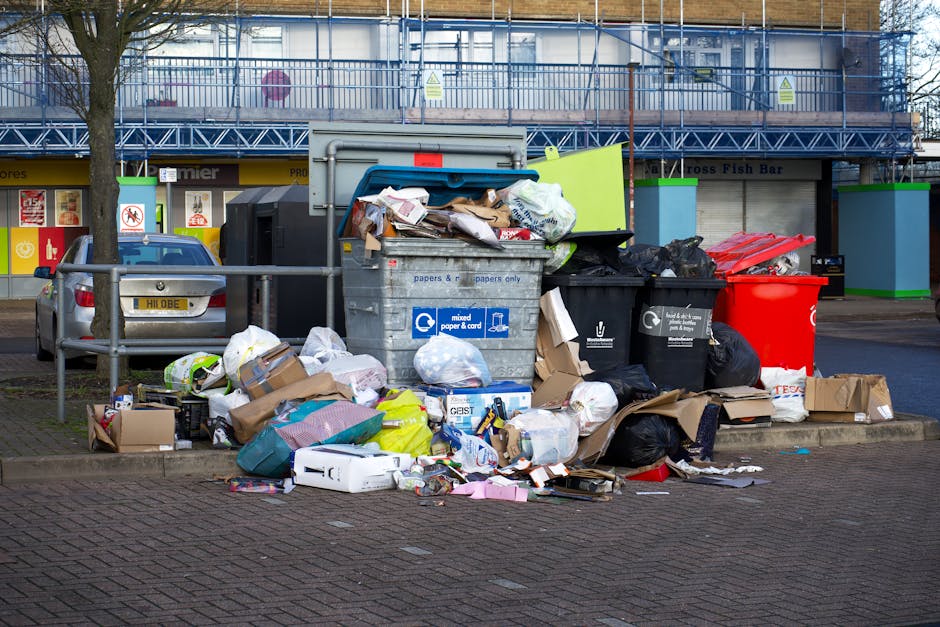
West Norwood High Street Rubbish Removal Guide for Local Homes
If you live near West Norwood High Street, rubbish removal can feel oddly complicated for something so ordinary. One minute you're clearing a hallway cupboard, the next you're staring at a broken wardrobe, a few black bags, and a pile of odds and ends that will not fit neatly into the weekly bin. This guide on West Norwood High Street rubbish removal guide for local homes is here to make the whole process feel simpler, calmer, and much more manageable.
We'll walk through how local rubbish removal usually works, what to do before booking, which household situations it suits best, and the mistakes that tend to cause delays or extra hassle. You'll also find a comparison table, a practical checklist, and some grounded advice for choosing the right service without overthinking it. To be fair, most people don't need a grand strategy. They just need a clear plan.
For homeowners and renters in the area, this is often about more than getting rid of junk. It's about freeing up space, keeping shared access clear, and making sure waste is handled properly. If you want a broader overview of related services, the main waste removal service and the company's approach to recycling and sustainability are useful places to start.
- Why it matters
- How it works
- Key benefits
- Who needs this
- Step-by-step guidance
- Expert tips
- Common mistakes
- Tools and resources
- Law, compliance and best practice
- Options and comparison
- Real-world example
- Practical checklist
- Conclusion
- Frequently asked questions
Table of Contents
- Why West Norwood High Street rubbish removal guide for local homes Matters
- How West Norwood High Street rubbish removal guide for local homes Works
- Key Benefits and Practical Advantages
- Who This Is For and When It Makes Sense
- Step-by-Step Guidance
- Expert Tips for Better Results
- Common Mistakes to Avoid
- Tools, Resources and Recommendations
- Law, Compliance, Standards, or Best Practice
- Options, Methods, or Comparison Table
- Case Study or Real-World Example
- Practical Checklist
- Conclusion
- Frequently Asked Questions
Why West Norwood High Street rubbish removal guide for local homes Matters
High street homes and nearby streets tend to create a different kind of rubbish-removal problem than a quiet suburban cul-de-sac. Access can be tighter, parking is rarely generous, and waste often builds up in awkward bursts rather than in tidy, predictable loads. One month it's a sofa and a mattress; the next it's a loft clear-out, garden cuttings, and a few years' worth of "we'll deal with that later".
This matters because rubbish left too long can block hallways, attract pests, and make a home feel cluttered in a way that quietly drains energy. That sounds dramatic, but you know the feeling: one stuffed corner starts to spread. Suddenly the spare room becomes the storage room, then the storage room becomes the room nobody wants to enter.
There's also the simple practical side. In a busy part of South London, clearing waste efficiently reduces disruption for neighbours and helps keep shared access points usable. If your household is planning a big clear-out, it can also be worth looking at related services like house clearance or home clearance when the job is bigger than a standard rubbish load.
Expert summary: For homes around West Norwood High Street, good rubbish removal is less about brute force and more about planning. The best jobs are the ones that are sorted, accessible, and matched to the right service before collection day even starts.
How West Norwood High Street rubbish removal guide for local homes Works
In most cases, rubbish removal for a local home follows a fairly straightforward pattern. You identify what needs to go, decide whether it is general waste, bulky waste, furniture, garden waste, or builders' debris, then arrange collection with a service that can handle the load safely and legally.
For a smaller clear-out, the process may be as simple as lifting items to the kerbside or front garden area where they can be collected quickly. For more involved jobs, especially if you're dealing with stairs, flats, narrow entrances, or heavy household pieces, a full collection service makes more sense. It reduces the lifting on your side and, frankly, saves your back. Nobody needs a heroic lower-back story.
Good rubbish removal also depends on sorting. Reusable items, recyclable materials, and true waste should not all be treated the same. A responsible service will separate what can be reused or recycled from what must be disposed of. If you have old wardrobes, chairs, or sofas, the company's furniture clearance and furniture disposal options may be more suitable than treating everything as general rubbish.
Some homes also combine rubbish removal with other jobs:
- garage clear-outs after years of storing boxes and broken tools
- loft clearances before a renovation or house move
- garden waste after cutting back overgrown shrubs
- builders' waste after a bathroom or kitchen project
If that sounds familiar, services such as garage clearance, loft clearance, garden clearance, and builders waste clearance can be a better fit than a general one-off sweep.
Key Benefits and Practical Advantages
There's a reason people choose a proper rubbish removal service instead of trying to solve everything with a couple of car trips and a lot of determination. It is quicker, less stressful, and usually cleaner in practice.
The main benefits are easy to see, but the smaller ones matter too. A tidy front area can make a property feel more cared for. A cleared hallway gives you room to move. And getting rid of clutter can make the rest of the house feel lighter, almost immediately. That's not a magic trick. It's just space doing its job.
- Time saved: No repeated lifting, queuing, or sorting trips.
- Less disruption: Especially useful on busy streets or in shared access properties.
- Safer handling: Heavy items and awkward shapes are moved more carefully.
- Better organisation: Reusable and recyclable items can be separated sensibly.
- Less stress: You don't have to manage the whole logistics puzzle yourself.
Another practical benefit is flexibility. A household might only need one room cleared, or it may need a whole-property tidy before sale or renovation. Services such as flat clearance and house clearance are often better suited to those different scenarios than a one-size-fits-all approach.
Who This Is For and When It Makes Sense
This guide is mainly for local homeowners, renters, landlords, and family members helping with a property clear-out near West Norwood High Street. It's especially useful if you are dealing with bulky waste, mixed household rubbish, or items that are too awkward for normal bin collections.
It often makes sense in situations like these:
- you are redecorating and need old items removed first
- a relative has moved out and the property needs sorting
- you are preparing for a tenancy changeover
- the garage, loft, or shed has become unusable
- you have a few large items and a lot of smaller waste together
- you need waste cleared quickly before tradespeople arrive
Sometimes the trigger is very ordinary. A broken wardrobe starts with one missing hinge, then turns into a wobbly problem, then becomes a thing you keep stepping around for three weeks. Happens all the time. That's when a practical rubbish removal plan stops being optional.
Businesses and home offices are a slightly different case, but if your property includes a work area or small commercial space, it may be worth comparing household removal with office clearance or business waste removal depending on what you are clearing.
Step-by-Step Guidance
A good rubbish removal job starts before anyone lifts a single bag. The more organised you are, the smoother it goes. Here's a simple process that works well for most homes.
- Walk through the property. Look at every area that needs clearing, not just the obvious one.
- Separate the waste. Group furniture, garden waste, general rubbish, and anything reusable.
- Check access points. Measure doorways, note stairs, and think about parking or entry restrictions.
- Set aside anything you want to keep. This sounds obvious, but in a busy clear-out people do sometimes almost lose the remote control, keys, or documents in the shuffle.
- Decide what needs specialist handling. Heavy furniture, builders' debris, and mixed loads may need specific planning.
- Get a clear quote. Ask what is included, how the load is assessed, and whether labour or disposal is part of the price.
- Prepare the items on collection day. Keep paths clear and avoid stacking things in unstable piles.
- Confirm what will happen after collection. Ask how items are sorted, recycled, or disposed of.
That last point is important. A good service should be able to explain, in plain language, where your waste is likely to go and what happens to reusable materials. If that's something you value, take a look at the company's recycling and sustainability information.
For homes with mixed waste streams, a slightly more tailored plan works better. A loft clear-out might need bagging, a furniture removal might need disassembly, and garden waste may need loading separately. Little adjustments like these save time and avoid those annoying "we weren't expecting that" moments.
Expert Tips for Better Results
A few small habits make a surprisingly big difference. In our experience, the best rubbish removal outcomes come from people who treat the job like a short project, not a random weekend panic.
- Photograph bulky items before the visit. It helps with estimating load size and access needs.
- Group similar items together. Furniture with furniture, cardboard with cardboard, and so on.
- Keep a "do not remove" zone. A chair with paperwork on it is a risky chair.
- Disassemble only when it helps. Sometimes a bed frame should be left intact until removal day.
- Check for hidden weight. Wardrobes, drawers, and old cupboards can be heavier than they look.
- Plan around neighbours. Early morning noise, shared hallways, and tight parking all deserve a bit of thought.
Also, don't underestimate the value of a simple count. How many bags? How many items? Any mattresses? Any sharp edges? Those little details matter because they affect labour, vehicle space, and the time needed on site.
If you are dealing with a mix of household items and awkward old pieces, using a focused service such as furniture clearance can make the job feel less like a general mess and more like a clean solution.
Common Mistakes to Avoid
Most problems with rubbish removal are avoidable. The issue is rarely the waste itself. It's usually the planning around it.
- Leaving everything until the last minute. This creates rushed decisions and missed items.
- Mixing prohibited or hazardous materials with normal waste. That needs special care.
- Underestimating volume. One corner of junk can look harmless, then turn into a van-load.
- Not checking access. A front path, stairwell, or narrow gate can change the whole job.
- Forgetting what should be kept. It happens more often than people admit.
- Choosing on price alone. Cheap is lovely until the service is vague, slow, or unclear.
Another common mistake is assuming every pile of waste is just "rubbish". In reality, different materials may need different treatment. Garden waste, old furniture, and DIY debris are not quite the same thing. They just look similar when they're all in a heap by the door.
Where jobs are more property-wide than item-specific, the broader home clearance option can sometimes be more efficient than booking several separate collections.
Tools, Resources and Recommendations
You do not need much to prepare properly, but a few simple tools help.
- strong refuse sacks or heavy-duty bags for loose items
- marker labels for keeping, donating, and removing
- gloves for sorting dusty loft or garage items
- a tape measure for doors, stairs, and larger furniture
- a phone camera for taking a quick inventory
- a notebook or checklist so you do not rely on memory alone
For service comparisons, it helps to know which page matches your need before you ask for a quote. For example, a clear-out of old cupboards and chairs may be better suited to furniture disposal, while a property with stacks of mixed items may be more suited to house clearance or flat clearance.
If you want a deeper sense of how the company handles standards, safety, and customer care, the pages on insurance and safety, health and safety policy, and about us are relevant and worth reading before you book.
Law, Compliance, Standards, or Best Practice
Rubbish removal is not just about convenience. In the UK, waste must be handled responsibly, and that means using a service that understands safe collection, proper disposal, and the difference between normal household rubbish and material that needs specialist treatment. You do not need to become an expert yourself, but you do need to avoid casual disposal habits that could create problems later.
As a homeowner, a sensible best practice is to make sure waste is passed to a provider that can explain where it goes and how it is processed. Keep your own records if the job is substantial, especially for renovations, landlord clear-outs, or recurring disposal needs. That way there's a clear trail and fewer headaches if questions come up later.
Insurance and safe working methods also matter. Heavy lifting, sharp objects, and tight stairways are all part of real-world rubbish removal, not just theory. A careful team should work with sensible handling methods and respect shared property spaces. If you want confidence on that side, the company's insurance and safety information is the right sort of page to review.
Best practice is straightforward:
- do not leave waste in a public or shared area without a plan
- separate items that may be reusable or recyclable
- avoid mixing ordinary rubbish with materials that need special handling
- use a service that is clear about what it takes and what happens next
That's the plain version, anyway. No drama, just sensible handling.
Options, Methods, or Comparison Table
There are a few ways local homes typically handle rubbish removal. The best option depends on quantity, access, urgency, and the type of waste involved.
| Method | Best for | Pros | Limitations |
|---|---|---|---|
| Self-loading and disposal | Very small amounts of waste | Good for tiny jobs if you already have transport | Time-consuming, physically demanding, multiple trips |
| Scheduled household collection | Routine everyday waste | Simple and predictable | Not suitable for bulky items or one-off clear-outs |
| Bulky waste or dedicated rubbish removal | Large items, mixed loads, awkward access | Faster, safer, less hassle | May need a more detailed quote |
| Specialist clearance service | Whole rooms, lofts, garages, or properties | Efficient for larger jobs and mixed contents | Requires more planning up front |
For most local homes around West Norwood High Street, the specialist clearance route is the most practical when the waste is bulky or varied. If the job is a simple household refresh, the more general waste removal route may be enough. If the job is bigger and messier, choose the service that fits the load rather than forcing the load to fit the service.
Case Study or Real-World Example
Picture a fairly typical Saturday morning. A family in a terraced house near West Norwood High Street decides it is finally time to clear the spare room. It has become a storage area for an old cot, two broken bedside tables, six boxes of paperwork, a battered chair, and a few black bags that were never properly sorted. The room smells faintly dusty, the window is stuck, and nobody wants to spend the whole weekend in there.
They start by separating what stays, what can be recycled, and what needs removing. Old documents are bagged separately, small usable items are put aside for donation, and the bulky pieces are checked for access. The chair is light enough, but the wardrobe is awkward and needs disassembly. Instead of trying to force everything into a car, they arrange a collection that suits the load.
By late afternoon, the room is clear, the floor is visible again, and the atmosphere changes almost immediately. It feels less like a storage cave and more like a proper spare room again. That change matters. Not just emotionally, but practically. The room can now be used for guests, work, or just breathing space. Simple, but powerful.
The key lesson from situations like this is that rubbish removal is rarely just about waste. It is about reclaiming usable space without turning the job into a week-long project.
Practical Checklist
Use this checklist before your collection day. It keeps things calm. Well, calmer.
- Identify all items to be removed
- Separate furniture, garden waste, and general rubbish
- Put aside anything valuable or personal
- Check stairs, lifts, gates, and narrow access points
- Measure oversized items if needed
- Decide whether disassembly is required
- Confirm the type of service you need
- Ask what is included in the price
- Clear the route to the items
- Keep children and pets away from the work area
- Ask how recycling or disposal will be handled
If you are clearing a garage, loft, or shed, the same checklist still applies. You just need to be a little stricter about dust, access, and hidden heavy items. Old paint tins, broken tools, and half-forgotten boxes have a habit of appearing all at once, usually at the back.
Get a free quote today and see how much you can save.
Conclusion
A sensible rubbish removal plan for homes near West Norwood High Street is not complicated, but it does reward a little preparation. Know what you're removing, choose the right service type, and make access as easy as possible. That combination saves time, reduces stress, and helps the job get done properly the first time.
Whether you are clearing a single bulky item, a cluttered spare room, or an entire property, the goal is the same: make the space usable again without creating more work than necessary. If you want a team overview before booking, the company's about us and contact us pages are the natural next stops, and the pricing and quotes page can help you think through the practical side.
Sometimes the best home improvement is just getting the unwanted stuff out of the way. Quietly. Properly. And then enjoying the open space for a bit.
Frequently Asked Questions
What counts as rubbish removal for a local home?
It usually means collecting and disposing of unwanted household items, mixed waste, bulky rubbish, and sometimes garden or DIY waste. It is broader than a normal bin collection and is meant for the things that do not fit everyday routines.
Do I need to sort everything before the collection?
It helps a lot, yes. You do not always need to sort into perfect categories, but separating furniture, garden waste, and general rubbish makes the job quicker and reduces the chance of confusion on the day.
Is rubbish removal suitable for flats near West Norwood High Street?
Yes, especially where access is tight or stairs make DIY disposal awkward. In those cases, a service like flat clearance is often more practical than trying to move everything yourself.
Can old furniture be taken away with general rubbish?
Sometimes, but furniture is often better treated as a separate load because it is bulky and may need different handling. Services such as furniture clearance or furniture disposal are usually the better match.
What should I do with items I still want to keep?
Move them to a clearly marked room or corner before the collection starts. Do not leave keep-items mixed in with rubbish, even if they look obvious to you at 8 a.m. On a busy collection day, obvious has a funny way of disappearing.
How do I know if I need a house clearance instead of rubbish removal?
If you are clearing multiple rooms, a full property, or a large mix of contents rather than just a few loads, house clearance is likely the better option.
Is garden waste handled differently from household rubbish?
Often, yes. Garden cuttings, soil, branches, and outdoor debris can require different handling from general household waste. For that reason, garden clearance is worth considering if the outdoor waste is substantial.
What if I have waste from a renovation or repair?
DIY and renovation waste may be better handled through builders waste clearance, especially if the load includes rubble, timber, plasterboard, or mixed construction debris.
How can I compare costs fairly?
Compare what is included, not just the headline price. Check load size, labour, access assumptions, disposal handling, and whether the quote covers everything you need. The pricing and quotes page is a good place to understand how that process works.
Do I need to be home during the collection?
Usually, yes, at least at the start. Being present helps confirm what is going and what is staying. After that, it depends on how the service is arranged and how access is managed.
What happens to the rubbish after collection?
That depends on the type of waste and the service, but a responsible provider should sort items for reuse, recycling, or disposal where appropriate. If sustainability matters to you, look at the company's recycling and sustainability page for a clearer picture.
Who should I contact if I want to ask about a specific job?
If you have a clear list of items, access details, and timing in mind, the most sensible next step is to use the contact us page and ask for advice on the most suitable service. A good conversation at the start saves a lot of faff later.